Bowie, Maryland
Aluminum Fence Installation in Bowie, MD
Aluminum Fence Installation in Bowie, Maryland, with published price ranges up front, the lines walked and the layout measured on site, and one written figure before any work begins.
Bowie, Maryland
Aluminum Fence Installation in Bowie, Maryland, with published price ranges up front, the lines walked and the layout measured on site, and one written figure before any work begins.
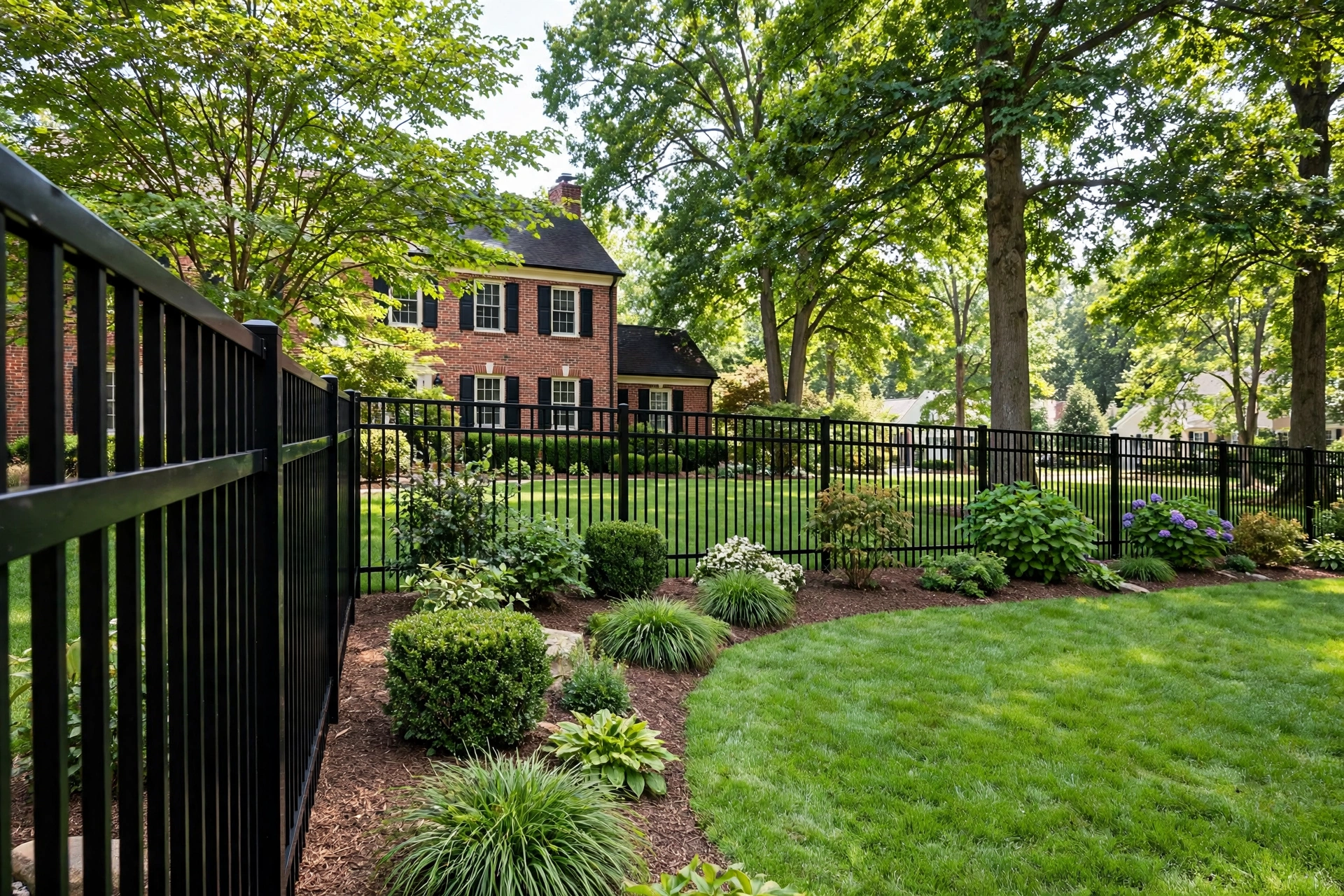
We install aluminum fences in Bowie where owners want a defined yard without closing off the view. Black aluminum with narrow pickets has become the familiar fence around Bowie pools and lots that back onto trees. It marks the line, keeps dogs and kids inside a set boundary, and still lets a yard feel open.
That openness is the point. A solid fence hides a garden or a wooded back edge. Aluminum frames it instead, which is why it appears so often at the back of lots where the view is the reason the home was bought.
Pool enclosures drive a large share of aluminum work here. A pool needs a barrier with a self closing, self latching gate, limited gaps, and a design children cannot easily climb. Aluminum picket fencing meets that pattern cleanly, so the fence works as a barrier, not merely a decoration.
Dogs are the second driver. A four or five foot fence contains most family dogs while keeping sight lines open from the kitchen or deck. For smaller dogs, closer picket spacing near the bottom, often called puppy picket styling, closes the gap a small dog would test first. Settle that detail before ordering, since spacing is built into the panel.
Curb appeal counts too, especially on lines visible from the street. Aluminum reads tidy and formal without the upkeep of painted metal from an earlier era, and its powder coated finish needs no repainting routine.
Residential aluminum fencing in Bowie is most often four, five, or six feet tall. Four feet serves many pool and front yard uses. Five feet adds dog security and a stronger sense of enclosure at a back patio. Six feet appears where privacy is less important than a firm boundary and a more substantial look, though an open picket fence at any height will never screen a yard the way wood or vinyl does.
Style turns on the top line. Flat top panels give a clean, modern edge. Spear top pickets suit older Old Town Bowie homes and brick colonials. Pool yards should confirm the chosen style still fits barrier needs before ordering.
Grade describes how stout the panel is. Residential grade suits most Bowie homes, while heavier grades use thicker pickets and rails for wider gates or harder use. Gate posts and frames matter most for daily satisfaction, because a wide gate that sags will annoy its owner every day.
Rackable panels tilt to follow a grade. Stepped panels stay level and drop in increments, which suits steeper sections. Back lines here often roll toward woods or a drainage swale, so the walk should trace the full line first.
Rules sit alongside style. In Woodmore, Fairwood, and Mitchellville, HOA standards can govern fence color, height, and placement, and black is the commonly accepted color in most sections. Homeowner approval comes first in those communities. Residential fence work in Prince George's County is largely permit light, with variation by height and corner lot position.
Aluminum posts are set in concrete at measured spacing, because factory panels only fit a layout that is true. A panel cannot be shaved wider to hide a spacing error. Layout stakes come before digging, with gate swing checked against patios, pool decks, and planting beds.
Roots change post spots on wooded back lines. Shifting a post a few inches and fitting a cut section is normal work here, if planned before panels are cut. Point out buried lines and irrigation heads at the walk so post holes avoid them.
Panel fitting follows once footings have set. Rails lock into posts, and gates are hung and adjusted for a clean latch. For a pool gate, that latch test is repeated several times. A gate that fails to close fully from a partly open position is not finished.
An Old Town Bowie yard with a pool and no barrier fence beyond an old garden edge needed a black aluminum enclosure that kept the view toward mature trees open. We set a five foot flat top aluminum fence around the pool and back yard, added closer lower picket spacing on the street side for a small dog, and fitted a self closing pool gate at the patio entry. Two back posts shifted to clear tree roots, with one racked panel following the fall toward the rear woods.
No Bowie company publishes a local price list, so plan from published figures, labeled as such. Published guides for typical fence projects put many jobs at $3,000 to $5,500. Published guides put wood fence installation at $1,974 to $4,551, with an average about $3,105, a comparison many owners request, and vinyl fencing commonly at $3,500 to $4,850 in published figures. For aluminum work on Bowie lots, a practical planning band is $3,400 to $6,200.
Length sets the base figure, and grade moves it from there. Taller panels, heavier grade, spear top styling, closer puppy picket spacing, and wide or double gates raise the total. Pool work adds gate hardware and careful layout time. Ground slope that needs racked or stepped sections adds labor at the back line. Your firm figure comes after the site walk and full line measurement.
Upkeep is light. A rinse and occasional wash keep pollen off the finish, and a spring walk finds any loose post cap or hinge needing attention before pool season. Keep landscaping from growing hard against pickets, since shrubs pushing through a panel can bend a picket over a season.
Aluminum gives no real privacy and only modest sound reduction. A determined large dog needs height and a latch it cannot work, discussed plainly at the walk. Shade, screening, and wind blocking belong to solid fencing.
In return, aluminum gives durability with an open feel and a pool barrier that does not turn a back yard into a walled box. For lots backing onto Bowie woods, that exchange is often exactly right.
Typical fence projects sit at $3,000 to $5,500 in published guides, and vinyl fencing commonly at $3,500 to $4,850 in published figures, for comparison. For Bowie aluminum work, plan on a band of $3,400 to $6,200, set by length, height, grade, and gate count. The site walk and line measurement produce your firm figure.
Yes, it is one of the most common pool barrier choices in Bowie. Picket spacing, height, and a self closing, self latching gate make the design work as a barrier. The exact style and gate placement for your pool are confirmed at the site walk before ordering.
Most family dogs, yes, at a suitable height. Smaller dogs need closer picket spacing low on the panel, and strong large dogs need height plus a sound latch discussed at the walk. Tell us breed and size in the quote form so spacing and height are planned correctly.
Aluminum itself does not rust like steel, and the powder coated finish protects the surface from normal weather. Chips from a hard impact should be touched up so the finish stays sealed. No repainting schedule is needed for ordinary Bowie weather exposure.
Yes. Rackable panels follow a gentle grade with pickets staying vertical, and stepped sections handle steeper drops in level increments. Many Bowie back lines need a mix of both. The full line walk decides where each method belongs.
Black is by far the most common Bowie choice and the color most HOA sections expect. Bronze and white appear in some product lines. Since HOA rules in several Bowie communities govern color, confirm any community rule before the color is final.
Tell us about the fence you need. We read every request that comes in and respond with the published range for that kind of work and the next step, starting with a visit to walk the lines and measure the layout.
Prefer to talk it through first? Send the form and we will call you back at the number you give us.