Bowie, Maryland
Fence Staining and Sealing in Bowie, MD
Fence Staining and Sealing in Bowie, Maryland, with published price ranges up front, the lines walked and the layout measured on site, and one written figure before any work begins.
Bowie, Maryland
Fence Staining and Sealing in Bowie, Maryland, with published price ranges up front, the lines walked and the layout measured on site, and one written figure before any work begins.
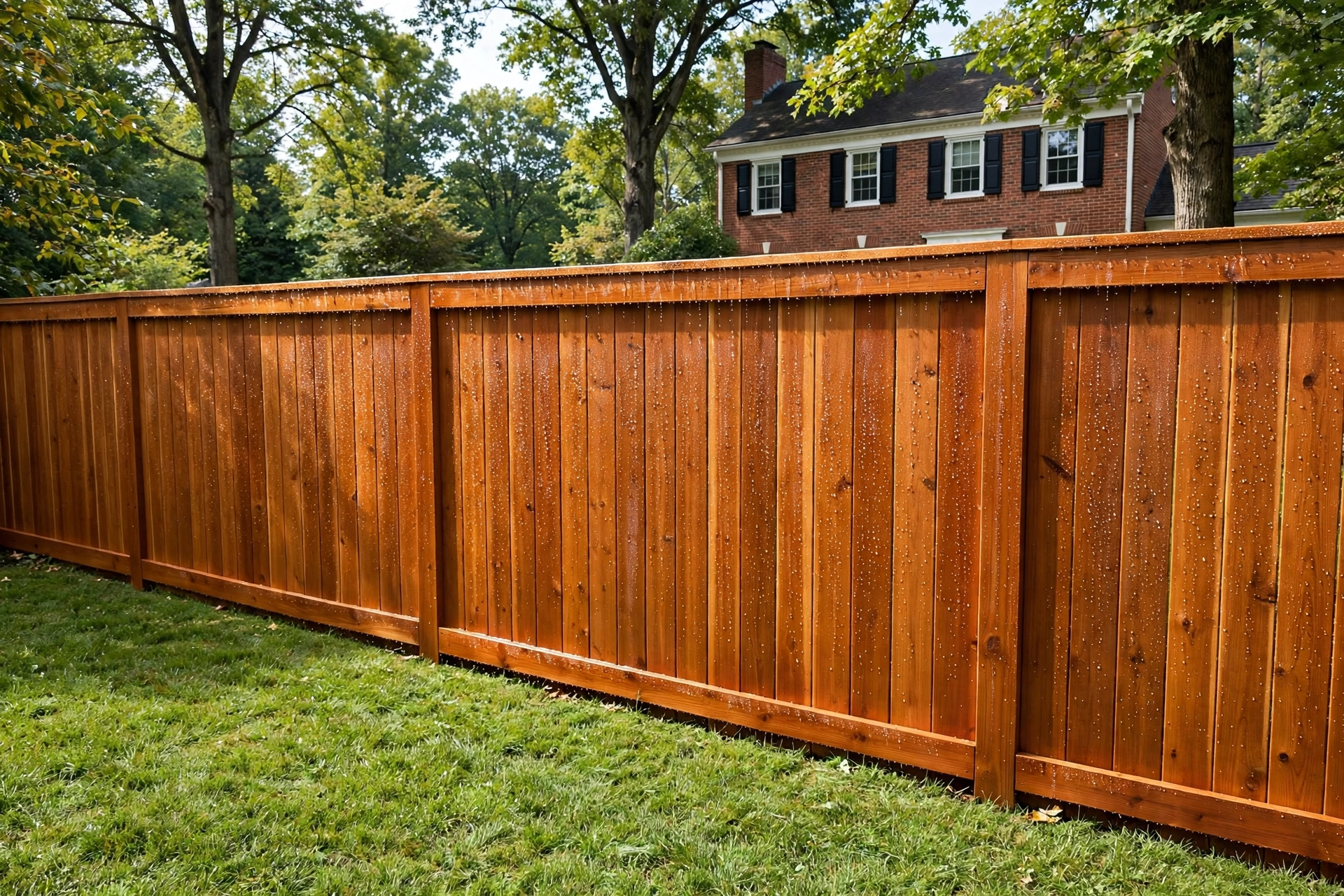
An unstained wood fence in Bowie turns gray fast. One or two summers of Maryland sun and storm rain, and fresh cedar or pine has silvered and started drinking water into every crack. We stain and seal wood fences across Bowie, less about color than about getting more years out of boards that were not cheap to put up.
Timing decides how well this works. Stain on new wood still wet from treatment beads and fails early. Stain on wood left too many seasons soaks in unevenly. The right window, and honest prep, are most of the craft.
The words get used loosely, so plainly: stain adds pigment, sealer adds protection, and most quality fence products do both in one coat. A clear sealer keeps natural color closest to new. A semi transparent stain adds tone and still lets the grain show. A solid stain behaves more like paint, covering weathered gray.
Cedar and pressure treated pine ask for different handling. Cedar arrives with natural oils and a rich color worth keeping visible, so semi transparent products suit it well. Pine privacy fencing, the most common wood fence in Bowie, starts pale green from treatment, then dries toward tan. Staining pine waits until the wood dries enough to accept product, confirmed by a moisture test rather than the calendar. Oil based products fade gradually rather than peel, which makes the next coat simpler.
No fence gets stained dirty. Mildew, pollen film, and gray oxidized wood block absorption, so the fence is washed first, with pressure low enough to clean without furring the grain. Boards soft through are flagged before any product opens.
After washing, the fence dries. Spraying stain onto damp wood traps moisture and ruins adhesion, so coating days are scheduled around the wash. Sprinklers get paused and plantings covered.
Application goes on in even passes, back brushed where thirsty boards need the product worked in. Gates get the same coats as the line, because end grain is where water enters first.
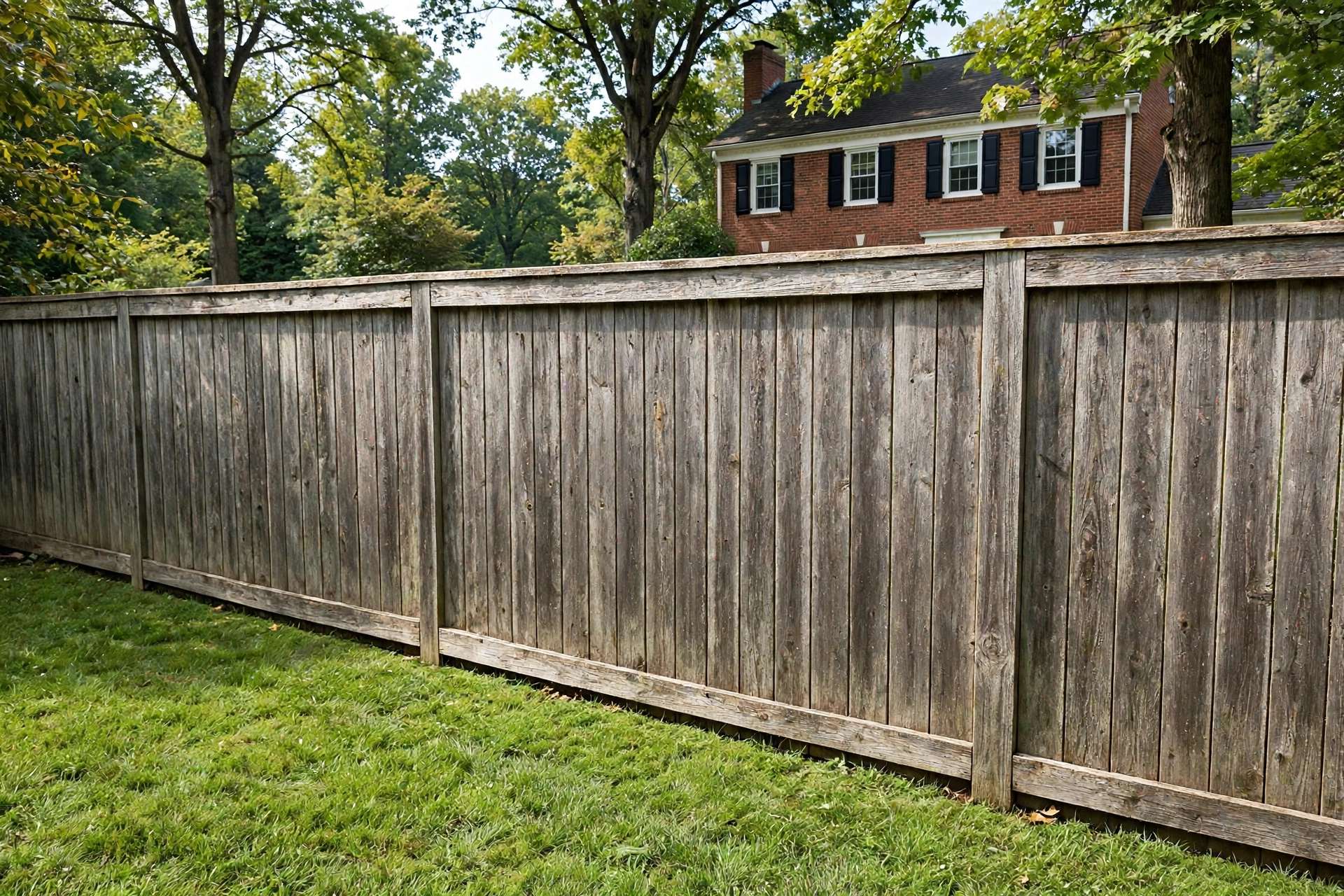
A Kenhill pine privacy fence, three summers old and never treated, had grayed heavily on its sunny side while the shaded back run carried mildew. We washed the full line, let it dry across two clear days, replaced two soft boards at a low corner, and applied a semi transparent stain and sealer across the fence and both gates. Both sides finished even.
No Bowie company publishes a local price list, so plan from published figures, labeled as such. Published guides put wood fence installation at $1,974 to $4,551, average about $3,105, which is the asset staining protects. For the treatment itself, published figures for fence staining and sealing run $650 to $1,600 for a typical residential fence.
Linear footage and height set the base, since product and labor follow surface area. Prep moves the number next: a fence stained on schedule needs a wash, while a neglected fence may need deeper cleaning and board replacements. A very long privacy line will price above the band.
Plan on a cycle, not a one time treatment. In Bowie weather, a stained fence generally wants attention every two to three years, with sunny elevations giving out first. Shaded runs hold color longer but grow mildew sooner.
A spring water test shows where the cycle stands: water that beads is protection working, and water that darkens the wood means the surface is drinking again. Staying on cycle is cheaper than recovering a neglected fence, which needs the full rescue sequence.
Published figures run $650 to $1,600 for a typical residential fence. Footage, height, prep condition, and product choice set your place in that range.
After the wood dries enough to accept product. Pressure treated pine goes up wet and needs drying time, often several weeks of fair weather. A water test tells more than a date on the calendar.
Every two to three years is the working cycle in Maryland weather, with sunny sides aging fastest. A spring water test each year shows whether the sealer still beads water.
Mostly, yes. Washing removes the gray oxidized layer and mildew, and stain then evens the color across old and new boards. Boards that are soft through should be replaced before coating.
Stain carries the color, sealer carries the water and sun protection, and most fence finishes combine both. Clear sealers protect with almost no color change, while solid stains cover like paint.
The side facing your yard is the standard scope, and the outward side can be included where access allows.
Tell us about the fence you need. We read every request that comes in and respond with the published range for that kind of work and the next step, starting with a visit to walk the lines and measure the layout.
Prefer to talk it through first? Send the form and we will call you back at the number you give us.